My apologies for being absent for so long. I have been away and it has taken a little while to get back to writing, mainly because this post is a special one!
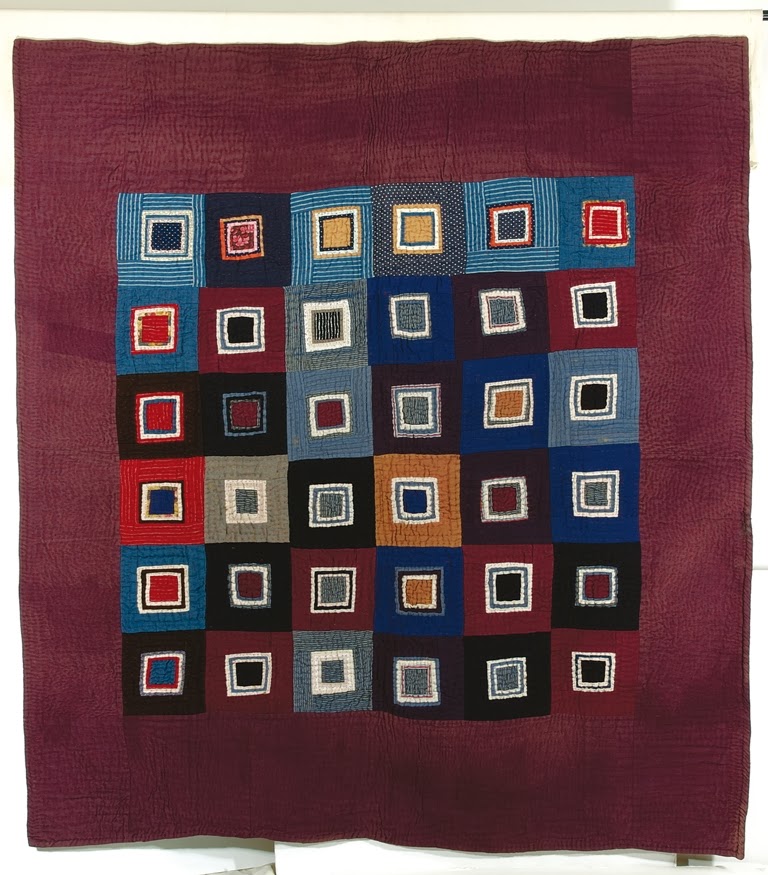
Remember in my last post I mentioned that there were two great happenings that week? Well after visiting the EB Book Launch at Stoke on the Tuesday, on the Thursday I had an appointment at St. Fagan's, the Welsh National History Museum. In January I had received a call from the Curator of Textiles telling me about their latest find. It's an early 19th century patchwork coverlet which as far as we know hasn't appeared in any publication before, so I am greatly honoured to be the first to make it public and share it here with you.
These pictures were taken and are posted here with the museum's permission and I am so grateful to Elen for contacting me about this patchwork. She said she knew it was my sort of thing and she was absolutely right about that!


These early 19th century British quilts are much admired by the quilting world and very often copied and adapted by designers with no commercial gain for the original owner, very often a museum who would benefit from some extra revenue. However, I think that perhaps this coverlet relies not so much on it's design, but on its fabrics, especially the unusual number of printed panels used in its making, which would make it difficult to reproduce.
This post is just a taster as in the next one I am going to show more close-ups of fabrics and talk a little about them and also about how it was sewn. I will also share with you what we know so far about this patchwork, where it was made and who made it, so watch this space!
These pictures were taken and are posted here with the museum's permission and I am so grateful to Elen for contacting me about this patchwork. She said she knew it was my sort of thing and she was absolutely right about that!
These early 19th century British quilts are much admired by the quilting world and very often copied and adapted by designers with no commercial gain for the original owner, very often a museum who would benefit from some extra revenue. However, I think that perhaps this coverlet relies not so much on it's design, but on its fabrics, especially the unusual number of printed panels used in its making, which would make it difficult to reproduce.
This post is just a taster as in the next one I am going to show more close-ups of fabrics and talk a little about them and also about how it was sewn. I will also share with you what we know so far about this patchwork, where it was made and who made it, so watch this space!